
Sex Offender Checks in Gilliam County
The Oregon Sex Offender Online Search is the public starting point for Gilliam County sex offender records. Oregon State Police maintains registration data, while the Oregon Board of Parole and Post-Prison Supervision classifies qualifying registrants. A searcher can use a name or narrow the results by Condon, Arlington, Lonerock, ZIP code, or Gilliam County. The state page is the remote channel. The Gilliam County Sheriff's Office is the local registering agency and answers questions about check-ins or a possible failure to report.
These channels serve different needs. The website shows information approved for public notification. The sheriff receives local reports and registration changes. Neither should be treated as a promise that a missing result means no registration duty exists. Oregon's Level 1 and Level 2 rules can limit broad web publication, and OSP may release added details when public protection calls for it. Match more than a name before drawing a conclusion.
Gilliam County Registry Search Limits
Oregon's public search does not list every registrant merely because that person lives in Gilliam County. Level 3 brings the widest notice and placement on the OSP public website. Level 2 notice reaches defined people and places tied to likely risk, while Level 1 is narrower. Classification controls notice; it is not the same as guilt, a new charge, or current custody.
An empty address search may reflect a narrow notification level, a recent move being processed, an alternate place description, or the limits of the live search controls. Try the person's name and nearby city or ZIP fields. Then contact the Gilliam County Sheriff if there is a concrete public-safety concern. Do not use a lack of online results as proof about an individual.
Note: Oregon notification levels determine who is told and how broadly, not whether the underlying registration obligation exists.
How to Search the Oregon Registry
Start with the official OSP registry and read its conditions of use. The live vendor design may change, but the researched controls support both identity and geographic searches. Use the least broad field that can answer the question, then compare visible details within the profile. If the concern crosses Oregon's border, the U.S. Department of Justice National Sex Offender Public Website provides the proper multi-state layer.
- Open the official registry and review the search notice.
- Enter a public name, or use city, ZIP, address, or Gilliam County.
- Switch between the available list and map views to review results.
- Open a likely profile and compare its public identifiers and reported location.
The available fields help distinguish a broad area check from a name match. Exact radius options were not captured in the research, so rely on the controls currently shown by the official site.
| Field Label | Type | Required | Notes |
|---|---|---|---|
| Name | Text | No | Search by a public registrant name |
| Location or address | Text | No | Supports geographic searching when displayed |
| City | Text or dropdown | No | Use Condon, Arlington, or Lonerock |
| ZIP code | Text | No | Five-digit area filter |
| County | Dropdown | No | Select Gilliam |
| Map or list | View control | No | Changes the results presentation |
Gilliam County Registration Office
The Gilliam County Sheriff's Office performs the local registration role at 221 South Oregon Street in Condon. OSP's registering-agency list publishes 541-384-2851. Current county material gives 541-351-9530 for the sheriff's general line. Since the sources assign different numbers to different functions, call ahead and state that the question concerns sex offender registration. Confirm hours, appointment status, and required papers before traveling.
Gilliam County Sheriff's Office
221 S. Oregon St.
PO Box 685
Condon, OR 97823
541-351-9530
OSP registry contact: 541-384-2851
The sheriff is the sound contact for suspected noncompliance in Gilliam County. Give officials the facts that caused concern. Do not investigate at a home, question a household, or confront the person. OSP also receives statewide questions through its Sex Offender Registration Section.
The OSP registering-agency directory shows the local office in its statewide context. That image source documents why county contact remains part of a sound Gilliam County registry check.
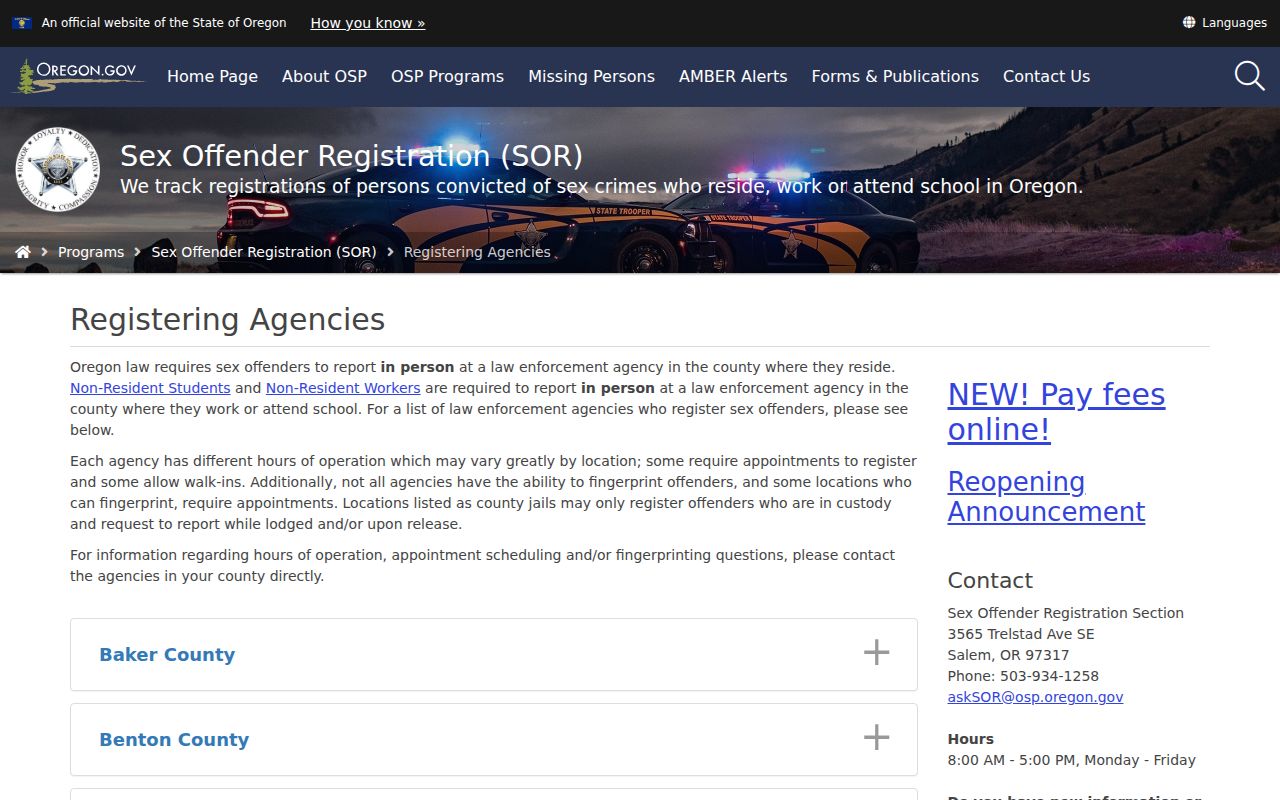
The directory is useful for routing a report, while the public registry remains the right place to begin an online location search.
Inside a Registry Profile
A public Gilliam County profile gives enough detail to separate likely matches and understand the published basis for notice. It may show the person's name and aliases, photograph, physical traits, reported residential or location information, qualifying offense and conviction facts, notification level, status, and identifying marks. Public visibility remains bounded by Oregon law. Vehicle, work, school, victim category, and compliance fields should be relied on only when the current profile actually displays them.
| Name and aliases | Public identity names attached to the registration record. |
|---|---|
| Photo and description | A public image, physical traits, and identifying marks when released. |
| Reported location | Residential or other location information at the legally permitted detail. |
| Offense and statute | Qualifying conviction information shown by the profile. |
| Notification level | Oregon's Level 1, 2, or 3 risk-based notice category. |
| Registration status | Any public status or reporting detail shown on the current profile. |
A profile is not a license to infer facts it does not state. It does not establish a new offense, current supervision, or permission to enter private property. For case documents, use the court record rather than stretching registry fields beyond their purpose.
Gilliam County and NSOPW Results
OSP and NSOPW overlap, but they are not interchangeable. OSP supplies Oregon's source record and explains Oregon classification. NSOPW searches participating public registries across jurisdictions, which helps when a person has ties outside Gilliam County or when a location near a state line matters. A cross-state result still must be read under the source state's rules.
The NSOPW search service shows the national layer available to Gilliam County readers. Its screen reinforces a key point: national results link back to participating public records rather than creating a new federal classification.
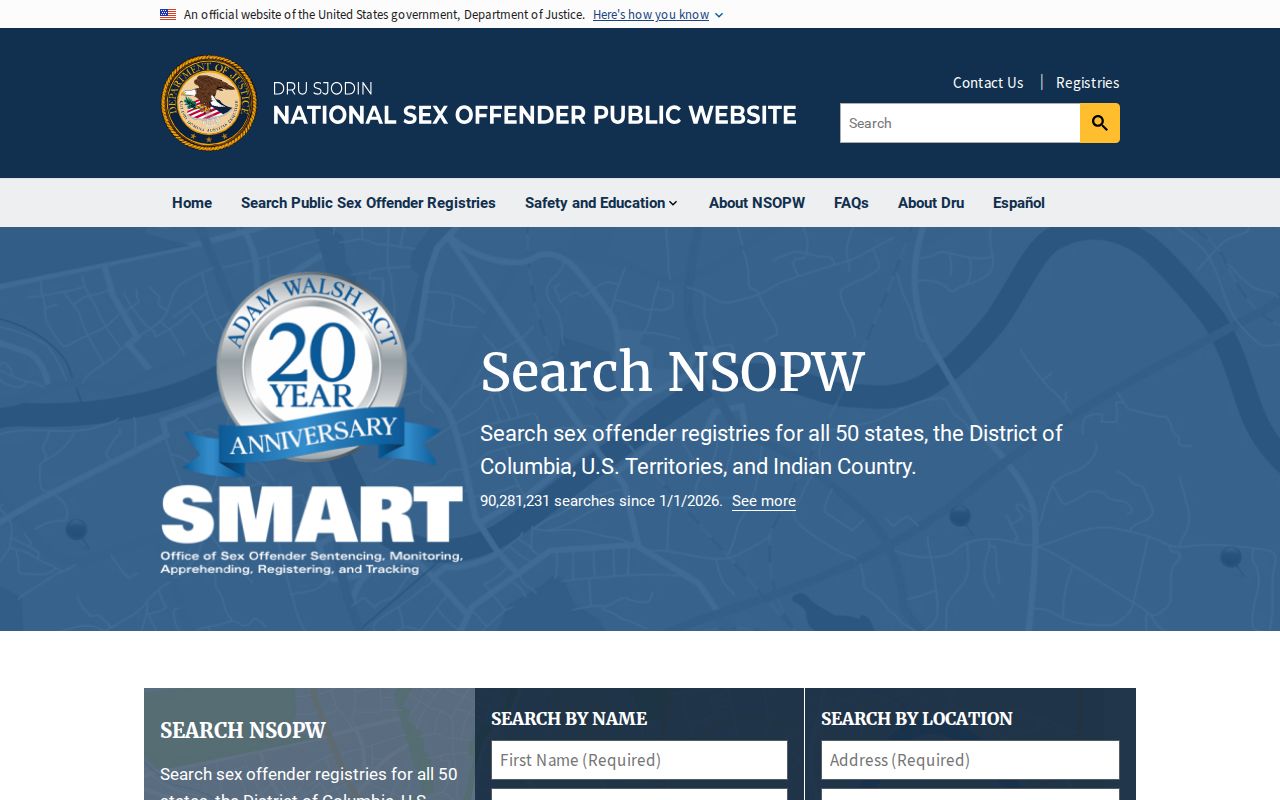
Use the originating jurisdiction's profile for the most specific status and notice terms. For Oregon entries, return to OSP and Gilliam County channels.
Oregon Registration Levels and Requirements
Oregon uses three notification levels. They describe the scope of notice based on risk classification, not fixed federal SORNA tiers. Everyone subject to registration renews annually and reports qualifying changes. Oregon guidance describes registration as generally lifelong unless the proper authority grants relief, so a level cannot be converted into a simple number of years.
| Level | Registration duration | Public visibility |
|---|---|---|
| Level 1 | Generally lifetime unless relief is granted | Narrow notice; generally not on the broad site solely by level |
| Level 2 | Generally lifetime unless relief is granted | May reach relevant neighbors, schools, childcare, parks, churches, and significant relationships |
| Level 3 | Generally lifetime unless relief is granted | Includes the OSP public website and local or regional media notification |
The OSP classification explanation provides the official frame for these levels. The captured source places risk classification, public notice, and registration duties in separate roles.
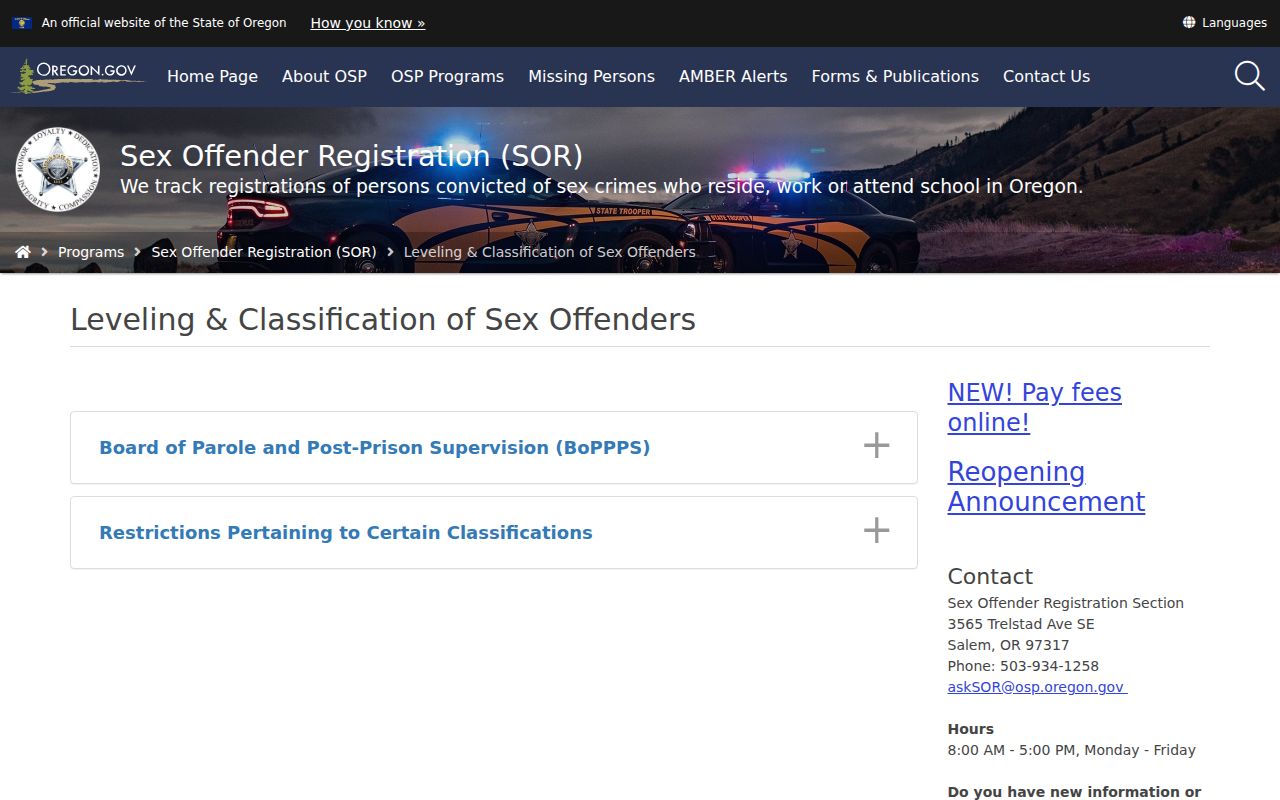
That separation prevents a common error: treating Level 3 as a federal tier or assuming Level 1 means short registration.
BOPPPS Classifies Gilliam County Registrants
The Oregon Board of Parole and Post-Prison Supervision performs risk classification for qualifying registrants. It also publishes the notice reach of Levels 1 through 3 and handles specified relief or reclassification routes. The Board role explains why the Gilliam County Sheriff can register a person without freely changing the person's notification level.
The BOPPPS victim-services explanation shows how notification expands by level. Its captured layout helps connect a Gilliam County registry result to the people and places that may receive notice.
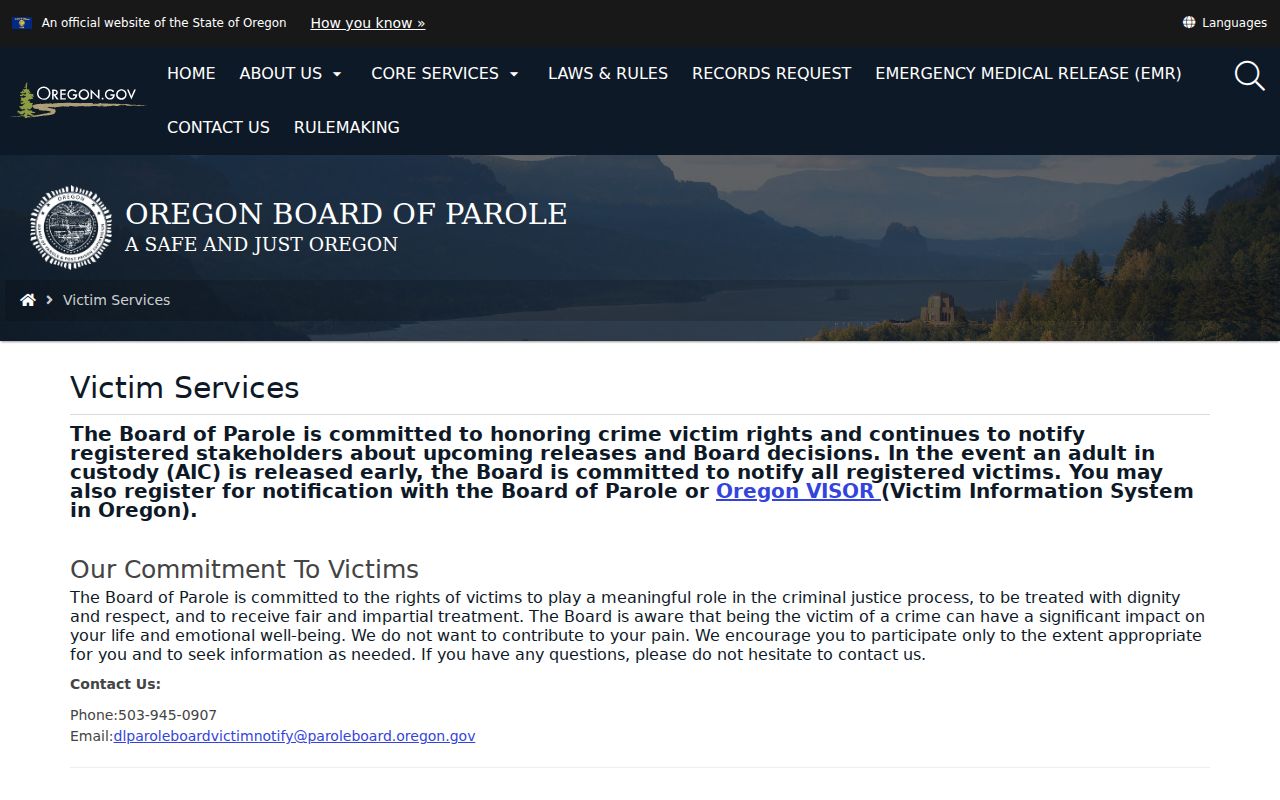
Reclassification and relief are fact-specific. Research notes time since supervision, later offenses, original level, and offense history among the controlling issues. Current agency forms and ORS Chapter 163A should control over a general summary.
Gilliam County Level Is Not Duration
Registration duration and public notification answer different questions. Oregon guidance describes the duty as generally lifetime unless a court or classification authority grants relief. Level 1 means narrower notice, not an automatic short term. Level 3 means broad notice, not a universal lifetime label created by the level itself.
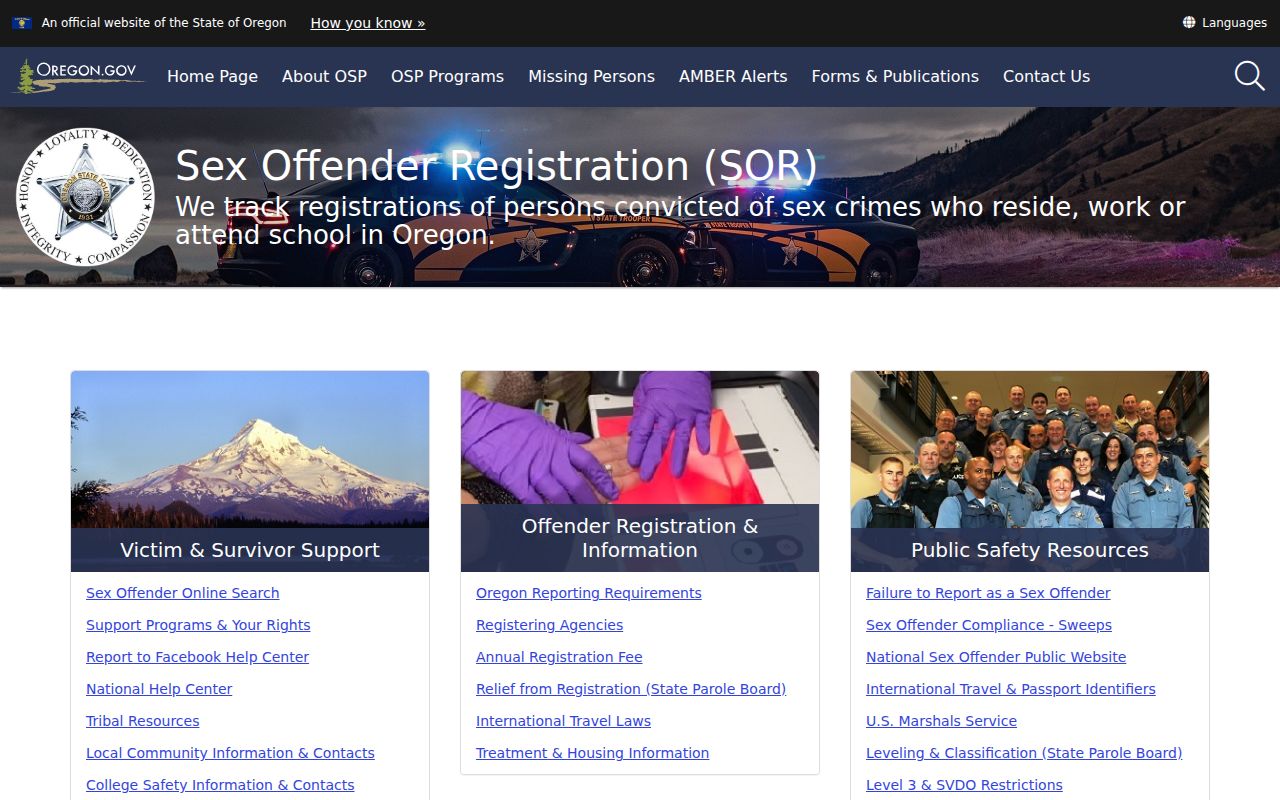
OSP's registration and safety hub is the central source for payment, reporting, and public information. The captured page shows the statewide program behind each Gilliam County registration contact.
People who must register report in person and keep covered residence, school, and work facts current. A person not under supervision may owe the $70 annual fee under ORS 163A.035. That fee does not determine public level or relief eligibility.
Note: Ask BOPPPS or OSP for the current relief checklist before relying on any date calculation for an individual record.
Community Notification and Lawful Use
Gilliam County registry information exists for awareness and safety planning. Readers may use it to understand a reported location, discuss family safety, and give officials a concrete compliance concern. The proper response to suspected noncompliance is a report to the sheriff or OSP. Direct contact, public accusation, threats, and trespass create risk and can harm innocent household members.
Use registry information lawfully: Oregon's registry warning and ORS Chapter 163A do not permit harassment, threats, intimidation, trespass, or vigilantism. Report concerns to law enforcement and do not confront anyone.
Community notice is calibrated by level. Level 2 may reach neighbors and places tied to likely victims, while Level 3 adds broad online and media notice. The public should not expand that notice through speculation or repost private data that the official profile withholds. Confirm current facts with the originating office before taking any safety step.